
As we grow older, our body starts to change in ways we may not always notice. After the age of 40, bones slowly begin to lose strength, making them more prone to pain, stiffness, and fractures. In fact, studies show that adults can lose nearly 1% of their bone mass every year after 40, and this loss can increase without proper care. This is why guidance from the Best Orthopedic Surgeon in Indore becomes important to understand early signs and protect bone health before problems become serious.
Bone health becomes even more important at this stage because reduced bone density can affect daily activities like walking, sitting, or climbing stairs. The right care, timely check-ups, and expert advice from Dr. Ankit Verma and a trusted Bone Health Specialist in Indore can help prevent long-term complications. With proper support from a reliable Joint and Bone Health Care in Indore approach, you can maintain strong bones, better mobility, and a more active, confident lifestyle.
Are Your Bones Aging Faster Than You?
Many people believe that bone health depends only on age, but the truth is your daily habits play a much bigger role. You may be 40, but your bones can either stay strong or become weak much earlier depending on your lifestyle. In fact, research shows that bone loss can start as early as the mid-30s, and after 40, people may lose around 1–2% bone density every year if proper care is not taken. This is why experts, including the Best Orthopedic Surgeon in Indore, always highlight the importance of early prevention and regular monitoring.
Your bone strength depends on how you live every day. For example:
- A person with good habits can have bones as strong as a 30-year-old
- A person with poor habits may face bone weakness like a 60-year-old
- Nearly 70% of Indians have Vitamin D deficiency, which directly affects bone strength
- Lack of physical activity increases the risk of bone loss and joint stiffness
Simple lifestyle factors like lack of sunlight, poor nutrition, stress, and no exercise can silently weaken your bones over time. This is where timely care becomes important. Regular check-ups with Dr. Ankit Verma and guidance from a trusted Bone Health Specialist in Indore can help track bone strength and prevent future complications. With proper support from Joint and Bone Health Care in Indore, you can maintain strong bones, better mobility, and a healthier, more active life.
Quick Bone Health Self-Check
Before serious problems begin, your body often gives small warning signs that many people ignore. After the age of 40, even mild discomfort can be an early signal of weakening bones or joints. Studies show that more than 60% of adults ignore early joint pain, which later turns into long-term issues. Experts, including the Best Orthopedic Surgeon in Indore, recommend paying attention to these early signs.
Ask yourself these simple questions:
- Do you feel joint pain while walking or climbing stairs?
- Do your bones feel weak, tired, or heavy during the day?
- Do you avoid movement or exercise because of discomfort?
- Have you had a fracture or injury in the last few years?
If your answer is “yes” to even one of these, your bones may need proper attention. Early consultation at a Bone and Joint Clinic in Indore can help identify the problem and prevent it from becoming serious.
Why Bone Health Is Important After 40
Bones are the foundation of your body. They help you stand, walk, bend, and stay active in daily life. However, as age increases, bones naturally lose strength and flexibility. Research shows that after 40, bone density gradually decreases, increasing the risk of fractures, joint pain, and mobility issues.
In fact:
- 1 in 3 women and 1 in 5 men above 50 suffer from bone-related problems
- Osteoporosis is one of the leading causes of fractures in adults
- Weak bones can increase the risk of falls and long-term disability
This is why timely care is important. With proper guidance from Dr. Ankit Verma and a structured approach to Joint and Bone Health Care in Indore, you can reduce these risks, improve bone strength, and maintain an active, pain-free lifestyle.
Hidden Warning Signs Your Bones Need Attention
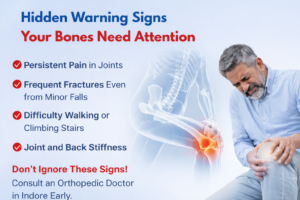
Your body often gives small signals before a major bone or joint problem begins, but many people ignore them. Studies show that nearly 65% of people delay treatment until the pain becomes severe, which can lead to long-term damage. Experts, including the Best Orthopedic Surgeon in Indore, advise paying attention to these early warning signs.
Watch out for these common symptoms:
- Cracking or clicking sounds in joints during movement
- Morning stiffness that takes time to go away
- Weak grip strength or difficulty holding objects
- Pain even after small activities like walking or climbing stairs
- Feeling heaviness or discomfort in joints without clear reason
These may look like small issues, but they are often the first signs of joint wear, early arthritis, or bone weakness. Ignoring them can increase the risk of fractures or chronic pain over time.
Early consultation with Dr. Ankit Verma and proper evaluation at a trusted Bone Health Specialist in Indore can help identify the root cause and prevent complications. With the right approach to Joint and Bone Health Care in Indore, you can manage symptoms early and protect your bones for the long term.
10 Tips to Keep Your Bones Strong
Taking care of your bones after 40 does not require complicated steps. Small daily habits can make a big difference in maintaining strength, flexibility, and overall mobility. According to health studies, people who follow a healthy lifestyle can reduce their risk of bone-related problems by up to 30–40%.
1. Eat Calcium-Rich Foods Daily
Calcium is the building block of bones. Adults above 40 need around 1000–1200 mg daily to maintain bone strength. Include milk, curd, paneer, almonds, and green vegetables in your diet. A balanced diet is an important part of Joint and Bone Health Care in Indore.
2. Get Enough Vitamin D
Vitamin D helps your body absorb calcium properly. Spending 15–20 minutes in sunlight daily can improve bone health. Studies show that nearly 70% of Indians have Vitamin D deficiency, which weakens bones.
3. Stay Physically Active
Regular movement keeps bones strong and joints flexible. Walking for 30 minutes daily can improve bone density and reduce stiffness. Even simple activities like stretching or yoga can help.
4. Maintain a Healthy Weight
Being overweight puts extra pressure on joints, especially knees and hips. Being underweight can also weaken bones. Maintaining a balanced weight helps reduce the risk of joint pain and fractures.
5. Avoid Smoking and Alcohol
Smoking reduces bone density and slows down healing. Alcohol affects calcium absorption in the body. Research shows that smokers have a higher risk of fractures compared to non-smokers.
6. Do Strength Training
Light strength exercises improve bone density and muscle support. Even simple resistance exercises can increase bone strength by 1–3% over time. Consult a Bone Health Specialist in Indore before starting if you have pain.
7. Take Care of Your Posture
Poor posture can lead to spine problems, neck pain, and joint stress. Sitting straight and avoiding long hours in one position can protect your bones and joints.
8. Stay Hydrated
Water keeps joints lubricated and reduces stiffness. The human body is made up of about 60% water, and dehydration can affect joint movement and comfort.
9. Go for Regular Check-Ups
Early diagnosis helps prevent serious bone conditions. Bone density tests and regular consultations at a Bone and Joint Clinic in Indore can detect problems before they become severe.
10. Don’t Ignore Pain
Pain is your body’s warning signal. Knee pain, back pain, or joint stiffness should not be ignored. Early consultation with Dr. Ankit Verma, known as the Best Orthopedic Surgeon in Indore, can help prevent long-term complications.
Under the guidance of the Best Orthopedic Surgeon in Indore, these simple habits can protect your bone health for years.
Common Mistakes People Make After 40
After the age of 40, many people unknowingly follow habits that slowly weaken their bones. The problem is that these mistakes do not show immediate effects, but over time, they increase the risk of joint pain, stiffness, and fractures. Studies show that nearly 70% of people ignore early symptoms, which later develop into serious orthopedic problems. Experts, including the Best Orthopedic Surgeon in Indore, always stress the importance of early awareness and lifestyle correction.
Here are some common mistakes to avoid:
- Ignoring early pain or stiffness, thinking it will go away on its own
- Sitting for long hours without movement, which weakens joints and spine
- Skipping regular exercise, leading to reduced bone strength
- Following a poor diet low in calcium and nutrients
- Taking self-medication without proper diagnosis
Avoiding these habits and seeking timely advice from Dr. Ankit Verma and a trusted Bone Health Specialist in Indore can make a big difference. With proper guidance and a structured approach to Joint and Bone Health Care in Indore, you can prevent long-term damage and maintain healthy bones.
Foods That Naturally Strengthen Your Bones
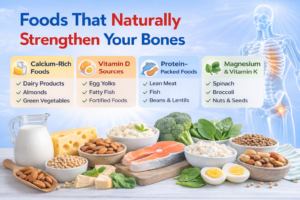
Your daily diet plays a major role in keeping your bones strong and healthy. In fact, around 60–70% of bone strength depends on nutrition. Without the right nutrients, even exercise may not be enough to maintain bone density. This is why a balanced diet is a key part of effective Joint and Bone Health Care in Indore.
Include these foods in your daily routine:
- Milk and dairy products, which are rich in calcium
- Spinach and green vegetables that support bone strength
- Almonds and nuts that provide healthy fats and minerals
- Eggs, which contain Vitamin D and protein
- Fish, especially rich in omega-3 and Vitamin D
A well-planned diet supports bone repair, improves strength, and reduces the risk of fractures. For personalized guidance, consulting a Bone and Joint Clinic in Indore can help you build a diet plan that suits your age and lifestyle.
Real-Life Example (How Early Care Makes a Difference)
Many people ignore joint pain until it becomes severe, but early action can completely change the outcome. A 45-year-old patient visited Dr. Ankit Verma with knee pain and stiffness that had been troubling him for months. He initially thought it was just fatigue and delayed treatment.
By the time he came for consultation, his movement had reduced, and daily activities like climbing stairs had become difficult. After proper diagnosis, guided physiotherapy, and a simple treatment plan, his condition improved within just a few weeks.
This is a common situation, as studies show that nearly 60–70% of patients delay orthopedic consultation, which can worsen the condition. Early care from the Best Orthopedic Surgeon in Indore not only reduces pain faster but also helps avoid long-term complications and complex treatments.
How Dr. Ankit Verma Helps You
At Orthocare Hospital Indore & Physiotherapy Centre, the focus is on complete and patient-friendly care. Every patient receives attention based on their condition, lifestyle, and recovery needs.
Patients benefit from:
- Accurate diagnosis to identify the exact problem
- Personalized treatment plans for better results
- Physiotherapy support to improve strength and mobility
- Step-by-step recovery guidance for long-term improvement
Dr. Ankit Verma ensures that patients clearly understand their condition and treatment process. With his experience and patient-first approach, many people trust him as the Best Orthopedic Surgeon in Indore for reliable and effective bone and joint care.
Bone Health: Myth vs Fact
There are many common myths about bone health that can lead to wrong decisions. Understanding the truth helps in better care and prevention.
1 Myth: Only older people get bone problems
Fact: Bone issues can start as early as 30–40 years, especially with poor lifestyle habits
2 Myth: Pain will go away on its own
Fact: Ignoring pain can increase the risk of chronic joint problems and long-term damage
3 Myth: Exercise damages joints
Fact: Proper and guided exercise actually strengthens bones and improves joint flexibility
Clearing these doubts with the help of a Bone and Joint Clinic in Indore can help you make the right decisions for your health. With proper guidance from a Bone Health Specialist in Indore, you can prevent problems and maintain strong, healthy bones for years.
Daily Routine for Strong Bones
Strong bones are built with small daily habits, not big changes. The way you live every day has a direct impact on your bone strength. Studies show that people who follow a simple healthy routine can improve bone strength and reduce the risk of fractures by up to 30%. Experts, including the Best Orthopedic Surgeon in Indore, recommend creating a consistent routine for long-term benefits.
A simple daily routine can look like this:
- Morning: 15–20 minutes of sunlight and a short walk to support Vitamin D and joint movement
- Afternoon: A balanced diet with calcium, protein, and nutrients for bone strength
- Evening: Light exercise, stretching, or yoga to maintain flexibility
- Throughout the day: Stay hydrated to keep joints lubricated and reduce stiffness
These small habits, when followed regularly, can protect your bones and keep you active for life. A structured plan guided by Joint and Bone Health Care in Indore can make these routines even more effective.
When Should You See a Doctor?
Many people wait until the pain becomes severe before consulting a doctor, but early signs should never be ignored. Studies suggest that early diagnosis can reduce treatment time and improve recovery outcomes by up to 50%.
You should visit a Bone and Joint Clinic in Indore if you notice:
- Pain lasting more than a week
- Difficulty in walking or daily movement
- Frequent injuries or fractures
- Joint stiffness or reduced flexibility
- Pain that increases with activity
Consulting Dr. Ankit Verma at the right time helps identify the root cause and start proper treatment early. Timely care from the Best Orthopedic Surgeon in Indore can prevent complications and support faster recovery.
What Happens If You Ignore Bone Health?
Ignoring bone health may not show immediate effects, but over time it can lead to serious problems. Research shows that untreated bone issues can increase the risk of disability and long-term mobility problems.
If bone care is ignored, it can lead to:
- Chronic joint pain that affects daily life
- Limited movement and reduced flexibility
- Frequent fractures due to weak bones
- Increased chances of surgery in later stages
Early care makes a big difference. Visiting a Bone Health Specialist in Indore and following proper Joint and Bone Health Care in Indore can help prevent these complications. Taking action today can help you avoid major problems in the future and maintain a healthy, active lifestyle.
FAQs
1. When should I visit the Best Orthopedic Surgeon in Indore?
If you feel pain, stiffness, or difficulty in movement for more than a few days, it is important to get checked. Early consultation helps identify the problem before it becomes serious. Visiting the Best Orthopedic Surgeon in Indore ensures proper diagnosis and timely treatment.
2. How can a Bone Health Specialist in Indore help me?
A Bone Health Specialist in Indore checks your bone strength and suggests the right tests if needed. They guide you with treatment, diet, and lifestyle changes. This helps prevent future bone and joint problems and improves overall health.
3. What is Joint and Bone Health Care in Indore?
Joint and Bone Health Care in Indore includes complete care for bones and joints. It covers diagnosis, medicines, physiotherapy, and preventive guidance. This approach helps improve movement, reduce pain, and maintain long-term strength.
4. Can bone problems after 40 be prevented?
Yes, many bone problems can be prevented with the right habits. A balanced diet, regular exercise, and sunlight exposure are very helpful. Regular check-ups at a Bone and Joint Clinic in Indore also help detect problems early.
5. Is physiotherapy helpful for bone and joint problems?
Yes, physiotherapy plays an important role in recovery and strength building. It helps reduce pain, improve flexibility, and support better movement. With proper guidance, it becomes a key part of Joint and Bone Health Care in Indore.